Host-pathogen interactions
Investigates biophysical cues that underlie Shigella-septin interactions, and illuminate their role in cell-autonomous immunity
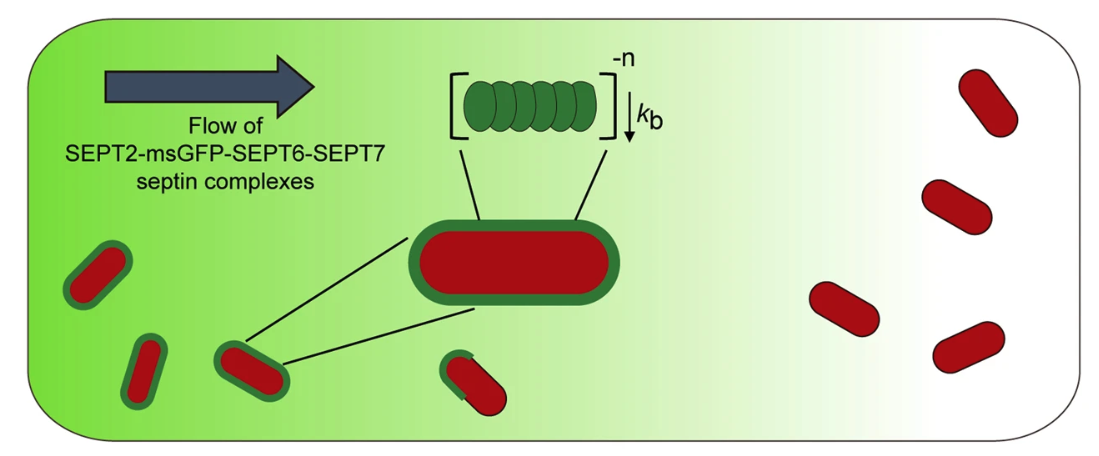
Shigella is a major human pathogen and a paradigm of cellular microbiology whose investigation in the lab has led to multiple seminal discoveries in the field of cell-autonomous immunity. Shigella can invade host cells, escapes from the phagosome, and proliferates in the cytosol. In response, host cells deploy septin cages, which entrap cytoplasmic Shigella.
My research focuses on uncovering whether septins possess intrinsic antibacterial activity and how their filament composition and structural organization shape this function. By combining a wide range of experimental approaches, our work aims to advance understanding of host defense mechanisms and introduce new concepts in antibacterial immunity.